
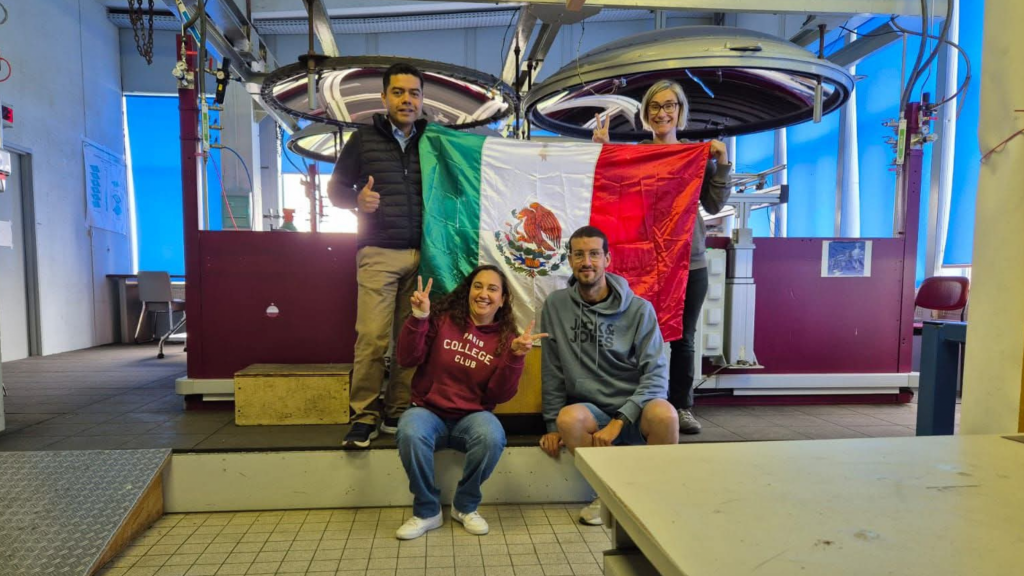
“Securing the resources for a research stay is very difficult in Mexico. Through RISEnergy, we gained access to cutting-edge technological infrastructure that enabled us to carry out experiments that would have been impossible with the resources available in our laboratory. Everything we learned has since been shared with our students.”
-Dr. Cristian Gómez Rodríguez, Universidad Veracruzana
This is how Cristian Gómez Rodríguez describes the impact of RISEnergy on the research he carries out with Dr. Linda García Quiñónez at the Universidad Veracruzana, a public university in the south-east of Mexico.
Together, Linda and Cristian develop advanced ceramic materials, the kind used to line the furnaces of the steel industry, where they have to withstand temperatures far beyond the melting point of metal. Cristian is a mechanical engineer whose master’s, doctorate and postdoctoral research are all in materials science, with a specialisation in ceramics. Linda trained as an industrial engineer before earning a doctorate in materials science and specialising in the laser processing of ceramics and semiconductors. Their fields meet in ceramics, and it is there that they collaborate.
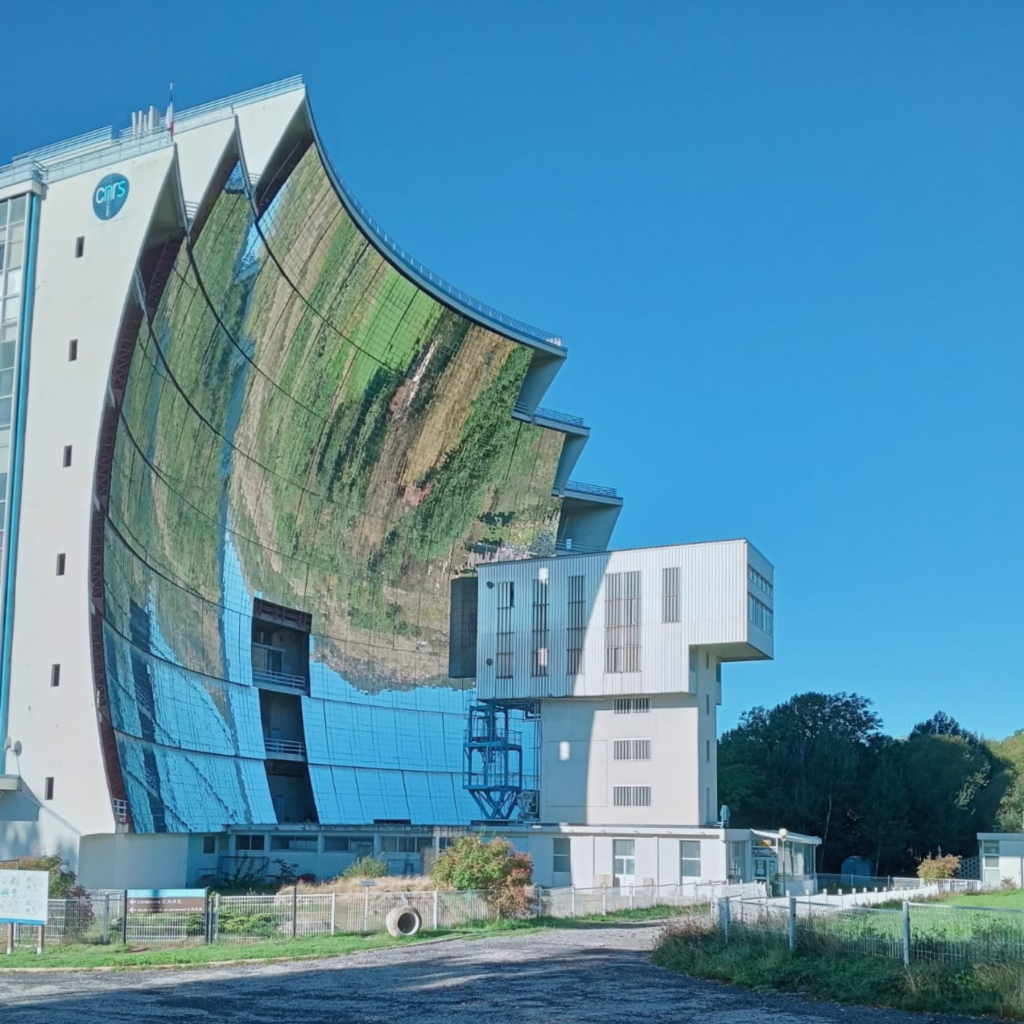
To explore a question, they could not answer in their own laboratory, whether concentrated solar energy could be used to repair ceramic materials, the pair travelled to the CNRS-PROMES solar furnace facility in Odeillo, in the French Pyrenees, through RISEnergy’s Transnational Access programme.
The research challenge
The team works on refractory ceramics: materials such as the firebricks that line industrial furnaces, where metals like steel are melted at extreme temperatures. To create and test these materials, Linda and Cristian use several processing routes (conventional electric furnaces, laser irradiation, and concentrated solar energy) and compare the results.
A persistent problem is that processing ceramics, particularly with lasers or conventional methods, can leave behind porosity and micro-cracks that are hard to close. Their hypothesis was that concentrated solar energy, by driving the material to very high temperatures, could trigger a form of self-repair: parts of the ceramic re-melt, pores shrink, cracks close, and the material reforms with an entirely new, denser structure.
There was a second motivation. Reaching the 1,800–2,000°C needed to sinter ceramics in a conventional electric furnace consumes large amounts of electricity and releases significant CO₂. Concentrated solar energy offers a renewable alternative, and Mexico, which receives abundant solar radiation, has a clear interest in developing it.
“I always tell my students that steel begins to melt at temperatures around 1,370°C, and ceramics need far more energy than that. So, it is striking to watch such a small, concentrated beam push the temperature past 2,000°C in a matter of seconds.”
– Dr. Cristian Gómez Rodríguez
Access to research infrastructure
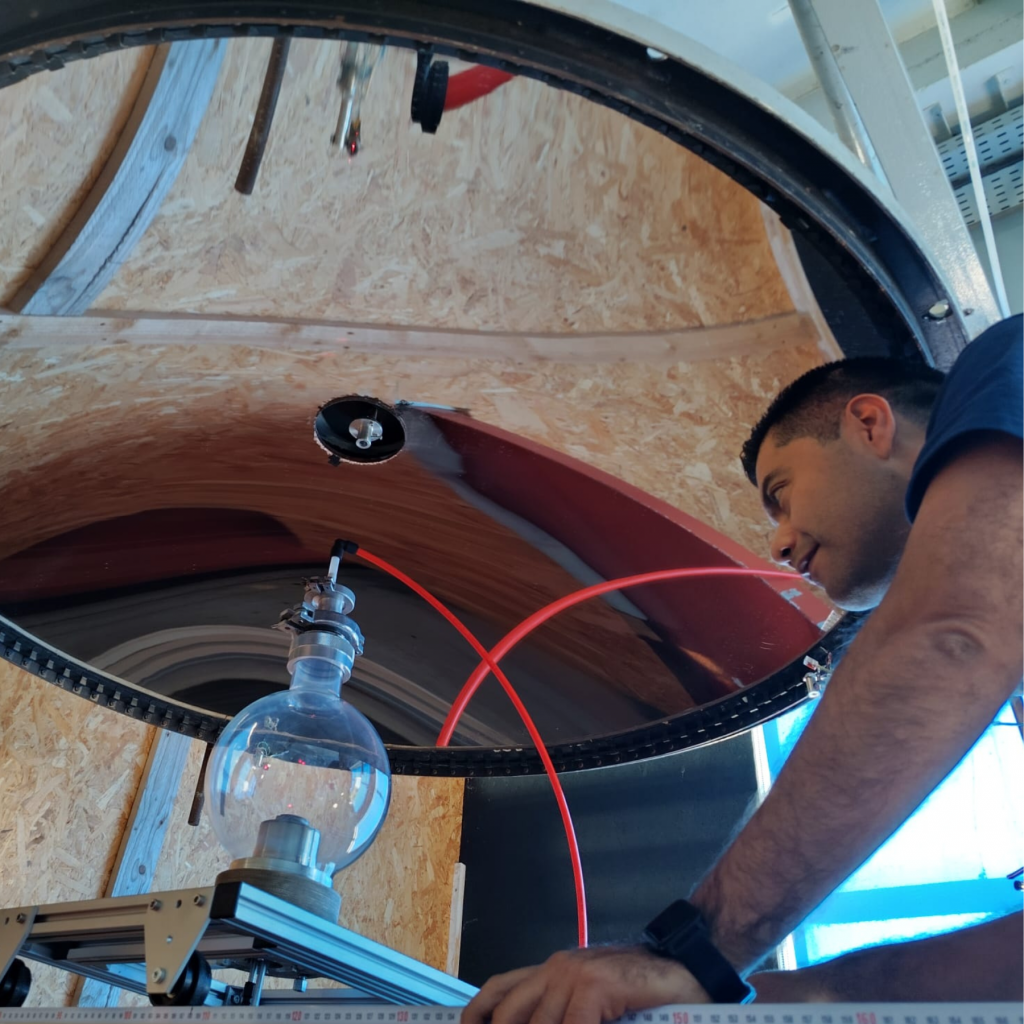
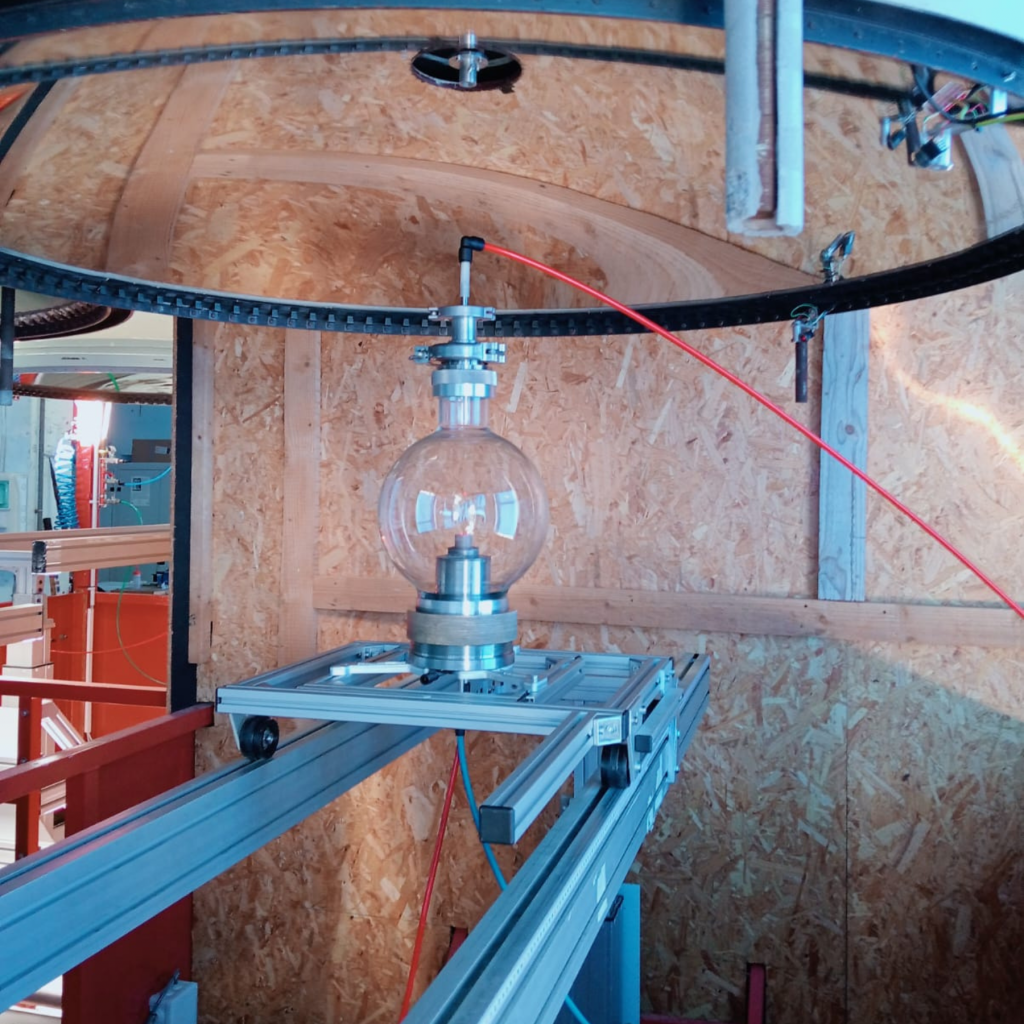
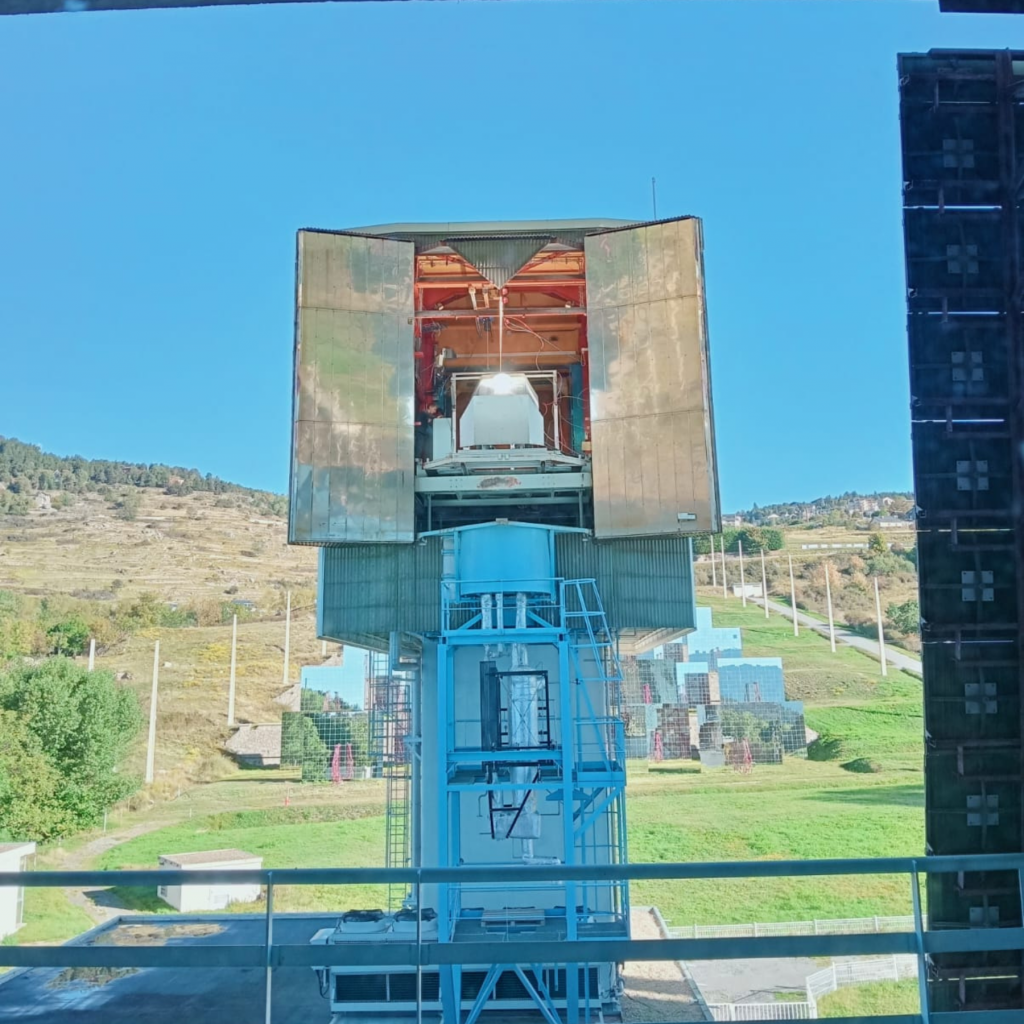
At Odeillo, the team spent five working days on the solar furnace. The principle is straightforward: a flat, sun-tracking mirror (a heliostat) reflects sunlight onto a large concave parabola, which concentrates all that energy onto a focal point only a centimeter or so across. In that tiny spot, temperatures climb past 1,500°C almost instantly.
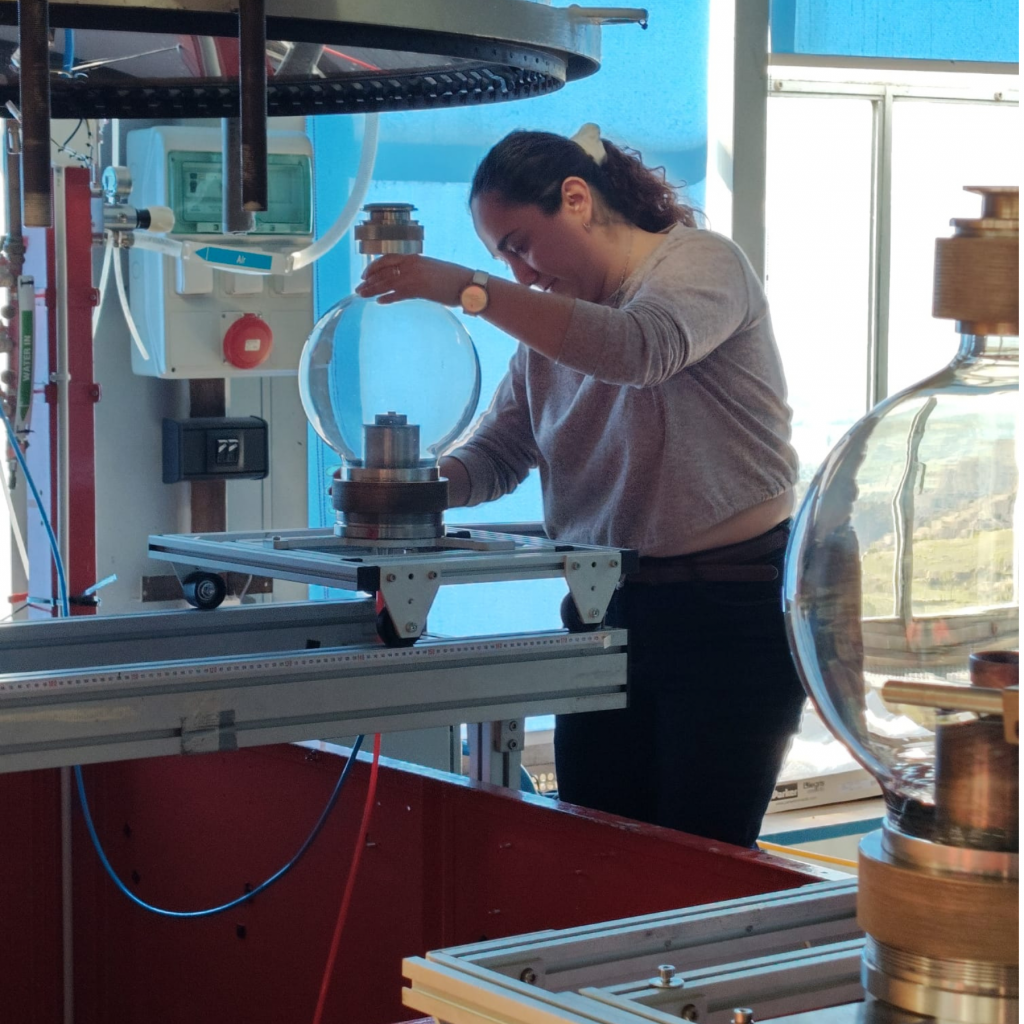
Working with two ceramic matrices, magnesium oxide and alumina (aluminium oxide), prepared with different dopants, the team formed small pellet-shaped samples and exposed them to the concentrated beam, in an iterative cycle of testing, observing and adjusting. They then analysed the resulting microstructures and new phases under high-power scanning electron microscopes, comparing the solar results against laser processing.
After a couple of hours of safety and operating training, Linda and Cristian ran the furnace autonomously for the duration of their stay, supported by an attentive on-site team and a shuttle service to the facility, which sits some distance from local accommodation. The one variable no one can control is the sky: a passing cloud or a change in the weather interrupts the radiation, so part of the work is simply waiting for the sun.
“I had never had the chance to see the solar furnace at its full power. It is incredible: materials that withstand 1,800°C turn, quite literally, to liquid and reform into something completely different”
– Dr. Linda García Quiñónez
Impact on their research journey
For Linda and Cristian, the access delivered impact on several levels.
First, it turned a hypothesis into evidence. By watching how their materials behaved under extreme, concentrated heat, the team could identify which formulations actually work. Alumina, and in particular alumina doped with iron oxide, gave the most promising results, pointing towards refractory materials that could one day be produced for industry using solar energy. Formulations that melted completely or fractured were ruled out. The team is now testing whether laser processing can reproduce the same effects.
Second, it accelerated and broadened their output. The work has fed two articles submitted to international, JCR-indexed journals, co-authored with Spanish collaborators, and an open-access podcast in which the researchers describe the infrastructure and the project. Closer to home, the findings have flowed directly into bachelor’s and master’s theses and into their teaching, and the pair are actively encouraging their students to apply for this kind of access themselves.
Third, it set concrete next steps in motion. Back in Mexico, Linda and Cristian are applying for national basic-science funding to acquire and operate a smaller solar furnace of their own. There is currently only one solar furnace in the country (Mexico), at UNAM, yet the south-east where they work receives intense solar radiation year-round. Bringing this capability to their region would mean new infrastructure, new research, and the training of a new generation of scientists. Along the way, the stay opened up fresh international networks, contacts working on different materials, but with real potential to converge.
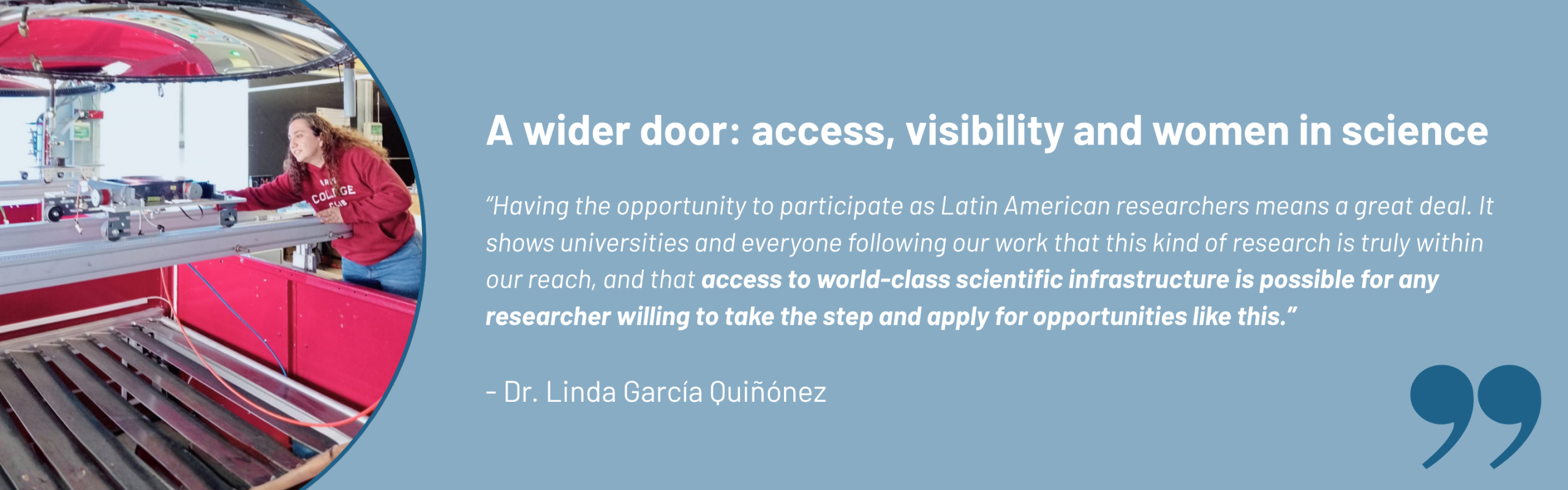
For Linda, part of what made the experience matter was simply being there as a Latin American researcher. Funding for international mobility is scarce in Mexico and securing it can feel out of reach. She was also struck by how balanced the research community at the facility was, with women well represented among the groups working on solar energy and materials, something she sees too rarely in her field. But she is candid about the barriers that remain, many of them practical.
“Almost all of my colleagues are women, and many are mothers. When I invite them to apply, the first questions are always: how long will you be away, and who will look after my children? Those barriers aren’t always taken into account.”
– Dr. Linda García Quiñónez
Linda and Cristian approach this experience as a research collaboration, sharing responsibilities throughout the mobility, and a flexibility that, as Linda notes, not every researcher has. Her message to programmes like RISEnergy is that visibility is decisive: much of how she first heard about the access scheme was word of mouth. Reaching women researchers through dedicated outreach and existing science networks is what will help more of them take part. Her own next ambition is to lead a project of her own, with a new family of materials.
Together, these threads give Linda and Cristian a clearer pathway forward and a story that reaches well beyond a single laboratory, from south-east Mexico to a mountaintop furnace in the Pyrenees, and back again to the next scientists who will carry the work on.
What is RISEnergy’s Transnational Access?
RISEnergy is an EU-funded project that connects researchers with leading energy research infrastructures across Europe and beyond. Through its Transnational Access (TA) programme, selected applicants can access these facilities free of charge to test, validate, and scale their technologies in real operating conditions. By removing barriers to infrastructure, RISEnergy helps bridge the gap between early-stage research and real-world application.