
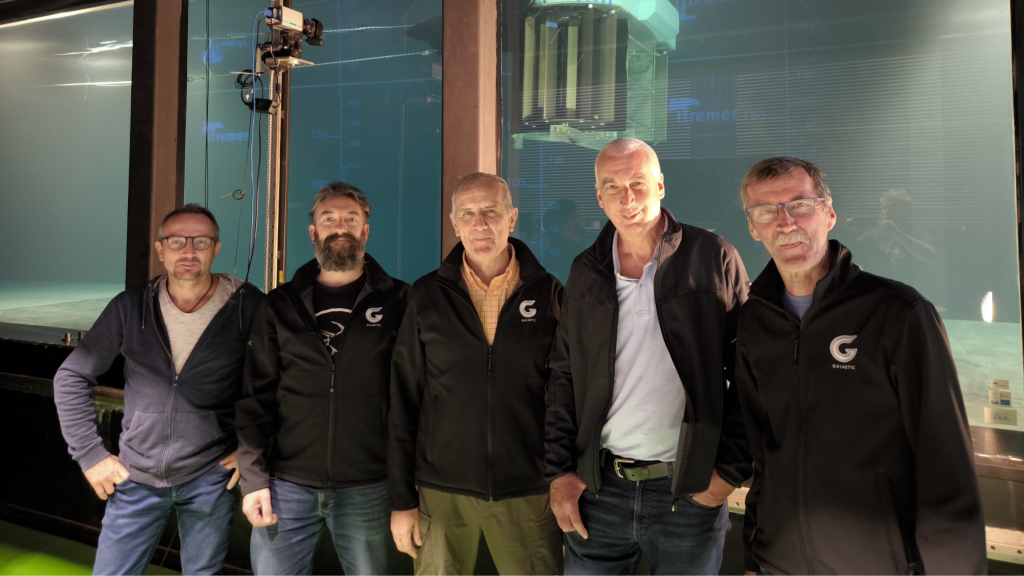
“RISEnergy gave us access to facilities that we would not otherwise have been able to afford as an SME. I don’t think we could have progressed our technology without this opportunity.”
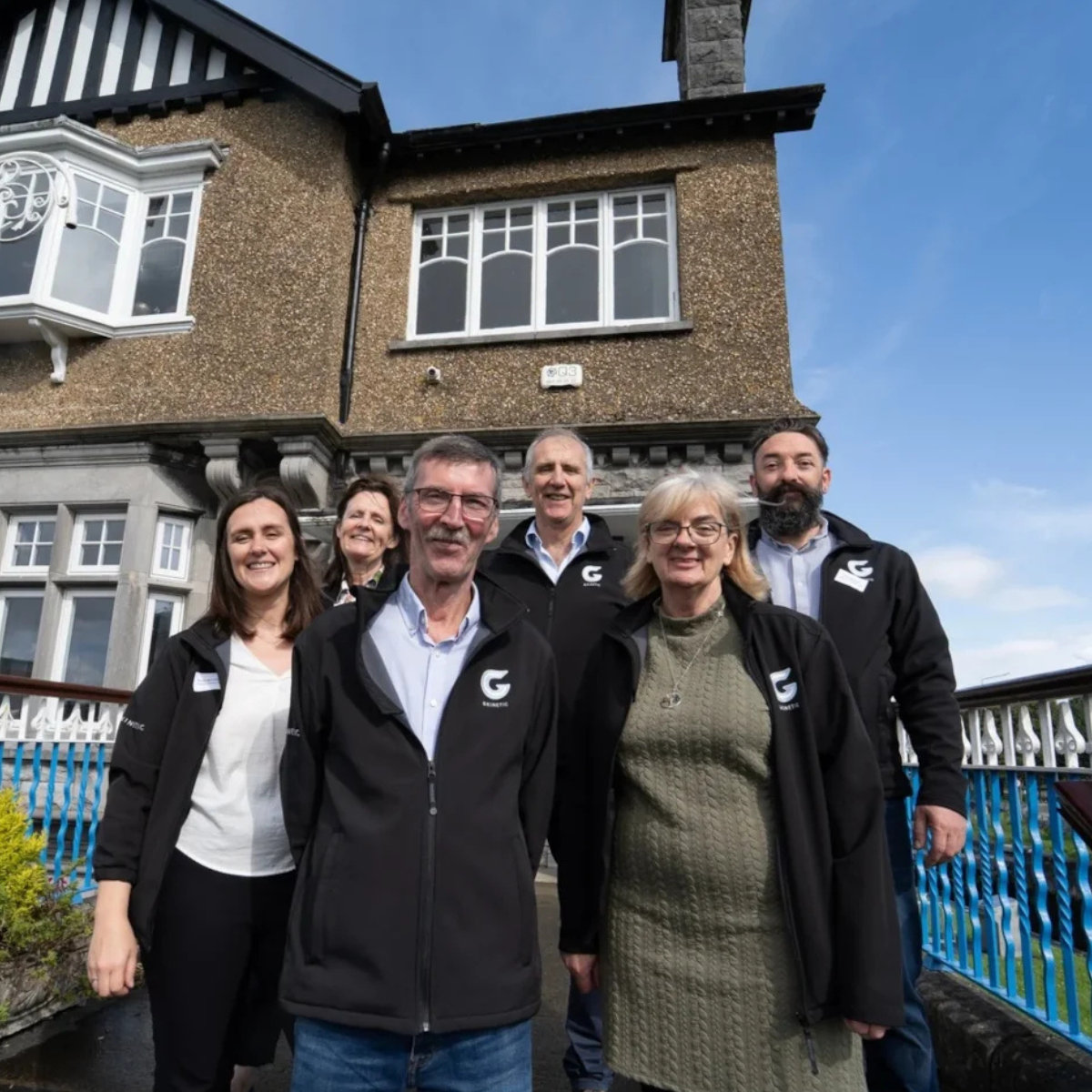
This is how Vincent Mc Cormack summarises the impact of RISEnergy on the research of GKinetic Energy, an Ireland-based pre-revenue SME developing hydrokinetic turbines.
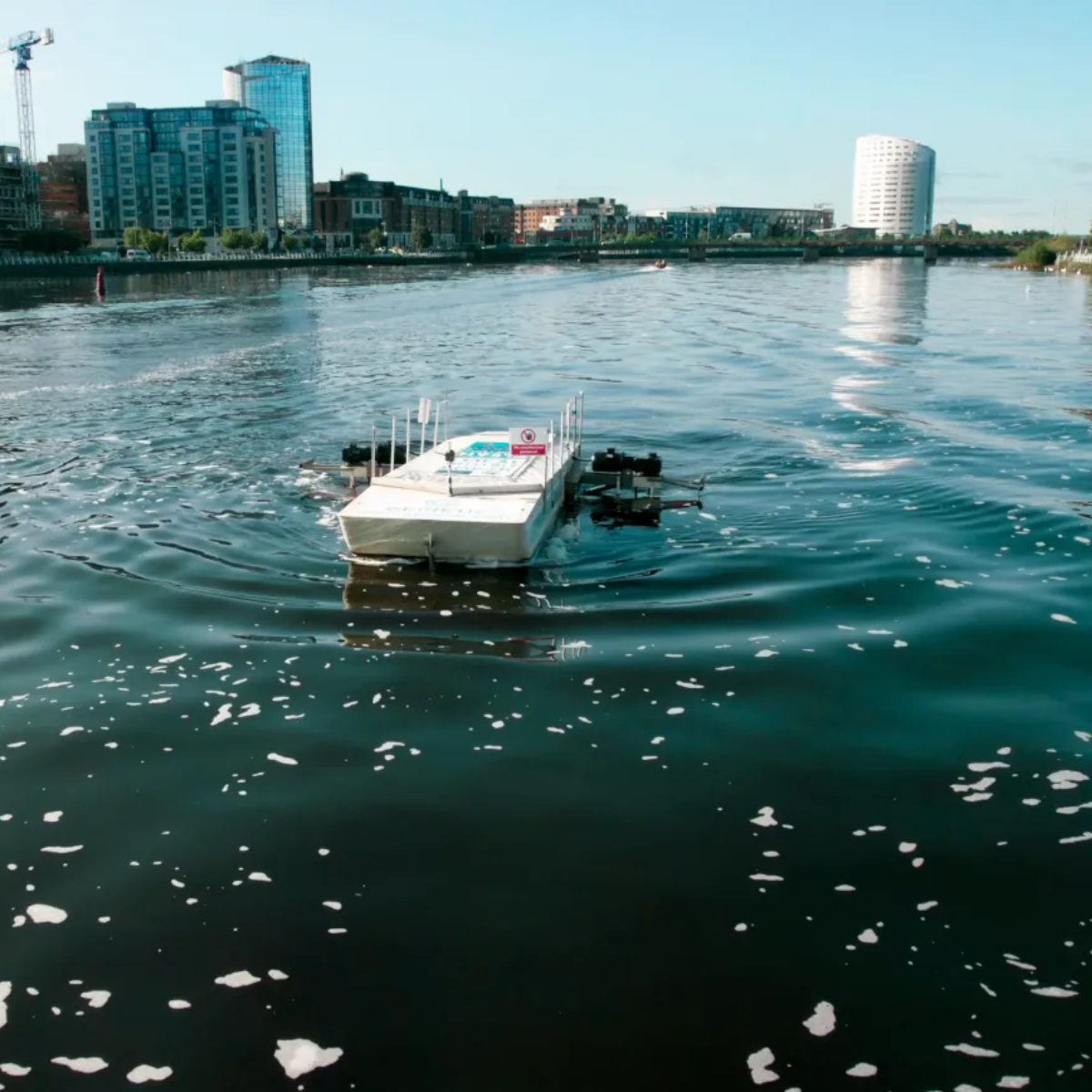
As an expert within the world of water, avid sailor and entrepreneur Vincent brings his practical experience into his role as CEO at GKinetic Energy, translating real-world intuition into energy solutions powered by water. Together with his team, Vincent is developing floating devices that generate electricity directly from rivers and canals, offering a flexible solution for local energy production.
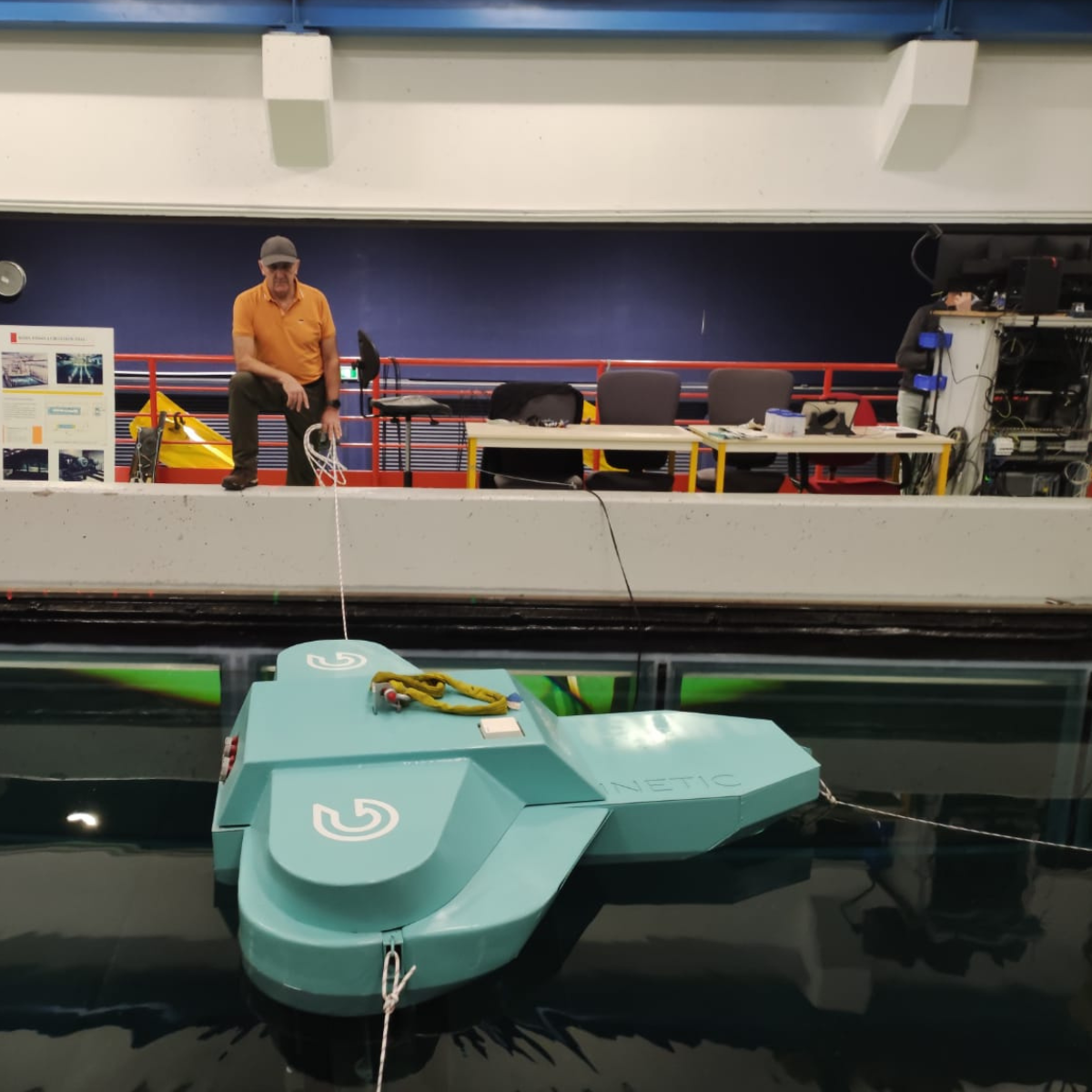
To better understand how water interacts with the turbine of their device and optimise its performance, the team travelled to the IFREMER Wave and Current Flume Tank test facility in Boulogne-Sur-Mer, France, through RISEnergy’s Transnational Access programme, where they were able to visualise and analyse water flow in controlled conditions.
The research challenge
GKinetic Energy is developing hydrokinetic turbines designed to generate electricity directly from flowing water. Their core technology consists of floating units equipped with turbines that can be deployed without heavy infrastructure, offering a simple and scalable way to produce clean, local energy. Unlike traditional hydropower, which relies on dams or large installations, these systems operate in free-flowing water, opening up access to a vast, largely untapped energy resource for local, small-scale use, from farms to small industries, or even households located near flowing water.
But turning this concept into an efficient and reliable product comes with a key challenge: understanding how water behaves around the turbine. Hydrodynamics — the way water flows and interacts with surfaces — is complex and difficult to observe directly. Much of the development process relies on computational models, which provide useful insights but cannot fully capture real-world behaviour.
“You’re making assumptions based on modelling like Computational Fluid Dynamics (CFD) modelling, but it’s never really as good as being able to see the flow.”
–Vincent Mc Cormack, CEO of GKinetic Energy
For GKinetic Energy, this created a critical bottleneck. How could they optimise their design without being able to see exactly how water moves around the turbine blades?
Access to research infrastructure
At the IFREMER test facility in France, GKinetic Energy tested a 3kW version of their turbine in controlled conditions and analysed how water flows around the system. Over 10 days, the team followed an iterative process: testing, analysing, adjusting, and testing again. Using the facility’s advanced measurement tools, they were able to map three-dimensional flow patterns around the turbine and assess how different configurations affect performance. This included testing variations in blade pitch angles and analysing power output and flow behaviour. Step by step, this allowed the team to refine the turbine setup and move closer to an optimal configuration.
Working at the facility meant access to specialised equipment, a well-established testing environment, as well as the help of experts from the IFREMER team. Vincent and his colleagues are already familiar with the facility and researchers on site, as this visit is not their first, and hopefully won’t be their last either. Getting to the right results and the adjustments needed to move their product from idea to reality, a journey the RISEnergy Transnational Access accelerates.
Impact on their research journey
For GKinetic Energy, the access brought an impact on three levels. First, it enabled the team to move from modelling to testing. By observing how water interacts with the turbine in controlled conditions, they could see how the system behaves in reality, not just in simulations, and gain a much clearer understanding of its performance.
Second, it accelerated their development process. Instead of relying on small-scale tests and incremental results, the team could run targeted experiments and refine their design in a more structured and efficient way.
Finally, it plays a critical role in moving towards commercialisation. Being able to demonstrate how the technology performs in realistic conditions provides the evidence and confidence needed to engage customers and bring the solution closer to market readiness.
Together, these elements give GKinetic Energy a clearer pathway forward. Back in Ireland, Vincent and his team used these new outcomes to improve the efficiencies of the turbine systems and set the next steps in motion: the planning of the first commercial pilot of the device.
What is RISEnergy’s Transnational Access?
RISEnergy is an EU-funded project that connects researchers with leading energy research infrastructures across Europe and beyond. Through its Transnational Access (TA) programme, selected applicants can access these facilities free of charge to test, validate, and scale their technologies in real operating conditions. By removing barriers to infrastructure, RISEnergy helps bridge the gap between early-stage research and real-world application.